
I recently asked my LinkedIn network, “What happens to your survey data after you collect it?” Their responses reveal something encouraging and worrying in equal measure.
The Good News: Nobody’s Wasting Data
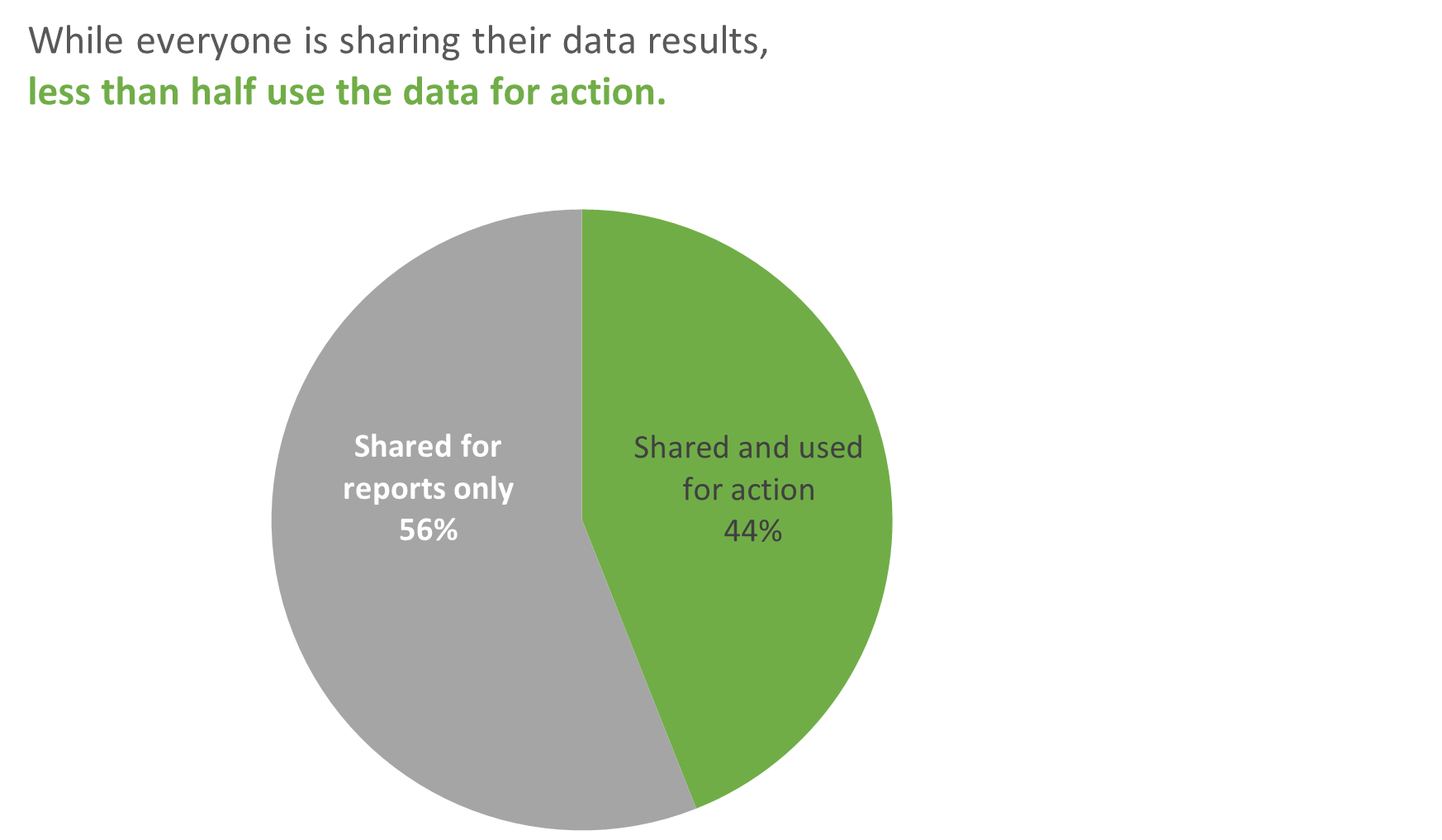
All respondents (n=9) are actively using their survey data. No one said their data sits unused in spreadsheets or gets analyzed but never shared.
Here’s where it gets interesting.

More than half are stopping at the reporting stage, just one step short of turning insights into impact!
This finding resonates with what I’ve come across in my work: Many organizations do well when it comes to ensuring reporting needs for annual reports, development opportunities and requirements. The next step, turning the insights into programmatic action and improvement, is not as purposeful or prioritized.
Reports Aren’t Enough
Reports answer the “What happened?” question by documenting trends, highlighting patterns, and creating a shared understanding of current reality.
But they often fall short of answering the critical follow-up: “Now what?“
The Bridge from Reporting to Action
So what moves the needle from reporting to action? In my experience, it comes down to some key elements:
Know your audience. The same report that excites the Development team or Board with overall trends will not be very useful to program managers. They need more detailed nuance. Create targeted reports for different interest groups, each highlighting the data points most relevant to their role and decision-making needs.
Collaborative interpretation. When you involve groups like the beneficiaries themselves and program staff in interpreting the data results, you gain rich insights otherwise missed. The recommendations become more relevant and significantly more likely to be implemented.
It’s important that these sessions are built around participation. Check out Public Profit’s hands-on guide to participatory data analysis to explore activities.
Debrief regularly. As one poll respondent shared, it’s important to have regularly scheduled debriefing sessions – as part of a program meeting if time is an issue- to make sure data insights and actions aren’t lost in the program operation cycle. This is really helpful when the data insights are shared at key periods of the program cycle.
Accountability Structure. The most effective action insights include ownership and timelines. They specify who will act by when. They also include how progress will be measured.
In the end, the best insights aren’t the ones that get reported, they’re the ones that get acted upon afterward.
Does your organization struggle to move from reporting to action? I help teams transform their data insights into strategic decisions that drive measurable results. Reach out to explore how we can bridge your action gap.